
What is the Rural Health Transformation Program (RHTP)?

Waiheʻe Ridge Trail – Maui

What is HOMERUN?

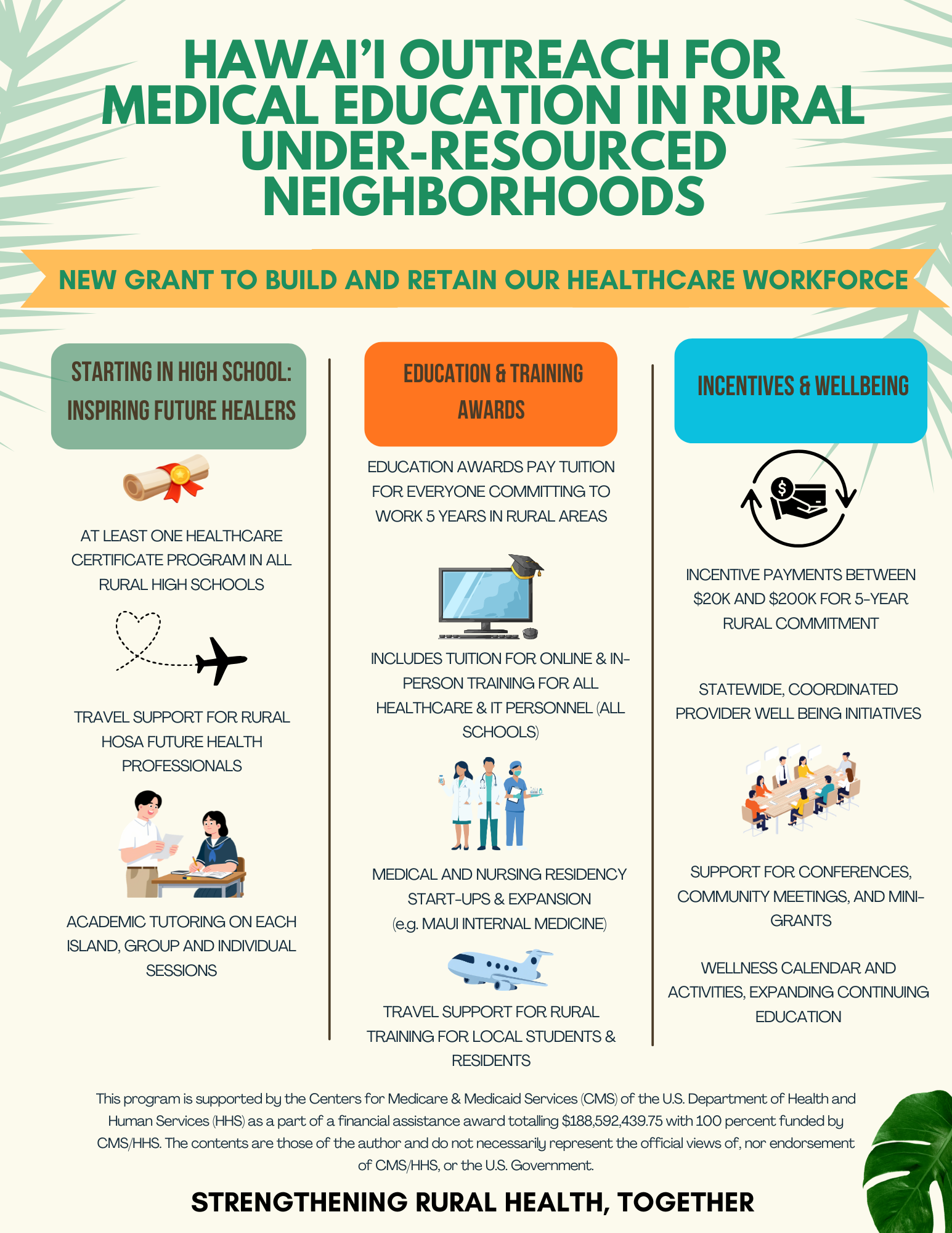
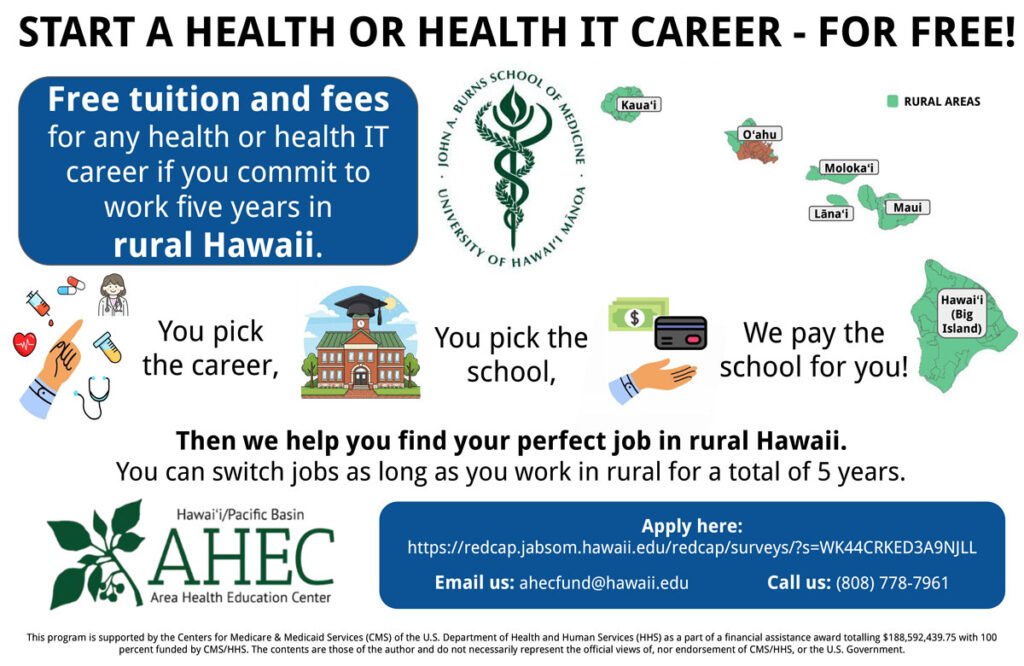
The Hawaiʻi Outreach for Medical Education in Rural Under-resourced Neighborhoods (HOMERUN) is the workforce initiative within Hawaiʻi’s RHT program. HOMERUN funding was awarded to the University of Hawaiʻi John A. Burns School of Medicine (JABSOM) and is led through the Hawaiʻi/Pacific Basin Area Health Education Center (AHEC).
HOMERUN is designed to build, recruit, support, and retain a strong healthcare workforce for rural Hawaiʻi. Through education and training, workforce investments, provider support, community partnerships, and rural health grant programs, HOMERUN supports healthcare professionals at every stage—from exploring a health career to building and sustaining a rural practice.
HOMERUN activities are carried out by JABSOM/AHEC and participating partner organizations, with each organization administering specific programs and funding opportunities.

HSRHA-administered HOMERUN opportunities:

Kuleana Connect Grant Program

How is the program supported?

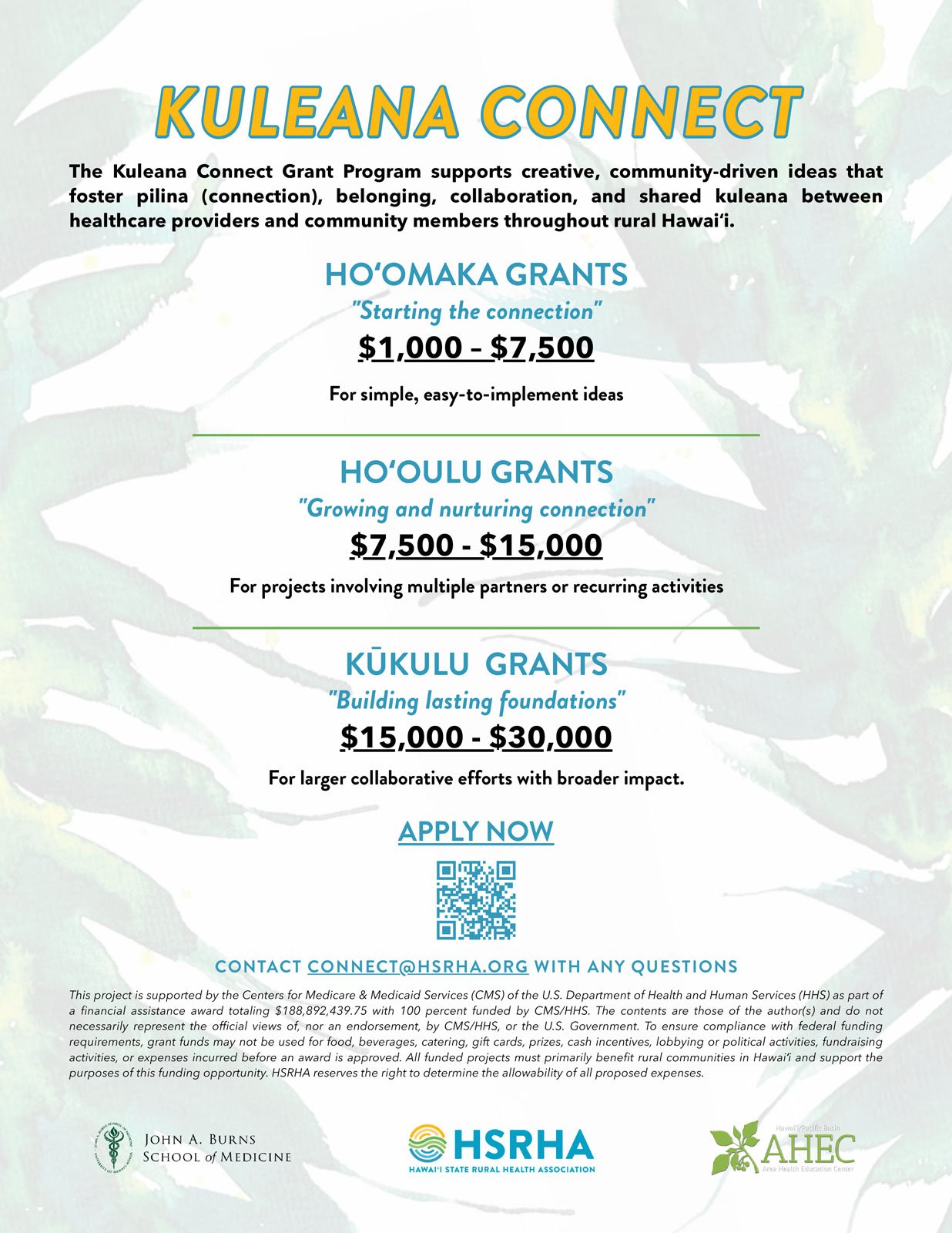
The Kuleana Connect Grant Program provides small grants to support creative, community-driven ideas that strengthen connections between healthcare providers, community, and well-being throughout rural Hawaiʻi. The program encourages projects that foster pilina (connection), belonging, collaboration, and shared kuleana while supporting provider wellness, recruitment, and retention.

Who administers the program?

The Kuleana Connect Grant Program is part of the Hawaiʻi Outreach for Medical Education in Rural Under-Resourced Neighborhoods (HOME RUN) program, led by the University of Hawaiʻi John A. Burns School of Medicine (JABSOM). The Hawaiʻi State Rural Health Association (HSRHA) administers the Kuleana Connect Grant Program in partnership with JABSOM to support community-driven projects that strengthen provider well-being, community connection, and rural healthcare workforce retention.

What does the Kuleana Connect Program offer?

The program offers three funding opportunities based on project size and scope:
• Hoʻomaka Grants: $1,000–$7,500 for simple, easy-to-implement ideas.
• Hoʻoulu Grants: $7,500–$15,000 for projects involving multiple partners or recurring activities.
• Kūkulu Grants: $15,000–$30,000 for larger collaborative efforts with broader community impact.

What is considered “rural Hawaiʻi”?

For purposes of the Kuleana Connect Grant Program, qualifying rural service areas include Hawaiʻi County, Maui County, Kauaʻi County, and designated rural areas of Oʻahu.
Eligible Oʻahu zip codes include:
• Waianae (96792)
• Wahiawa (96786)
• Waimanalo (96795)
• Hauula (96717)
• Laie (96762)
• Kahuku (96731)
• Haleiwa (96712)
• Waialua (96791)

Who may apply?

For purposes of the Kuleana Connect Grant Program, qualifying rural service areas include Hawaiʻi County, Maui County, Kauaʻi Organizations, clinics, healthcare practices, community groups, and collaborative partnerships serving rural Hawaiʻi are encouraged to apply. Individuals with innovative ideas are also welcome to apply and may partner with a fiscal sponsor if selected for funding. All funded projects must take place in and primarily benefit rural communities in Hawaiʻi.

Application Process

1. Does my project have to address every program goal?
No. Your project does not need to address every program goal to be considered for funding. We encourage projects that advance one or more of the program goals. Whether your idea is a simple neighborhood gathering, a cultural immersion activity, a volunteer initiative, or a larger community partnership, we welcome creative ideas that strengthen connections between healthcare providers, community, and well-being.

2. How are applications evaluated?
Applications are reviewed by the Kuleana Connect Grant Review Committee based on alignment with one or more program goals, as well as project feasibility, potential impact, readiness to implement, and benefit to rural Hawaiʻi.

3. Can I apply if I have applied for another mini grant from Puʻulu Lapaʻau?
Yes. Applicants who have applied for or received funding through another HOME RUN mini- grant opportunity, including Puʻulu Lapaʻau, are welcome to apply. HSRHA works closely with Puʻulu Lapaʻau and other HOME RUN partners to coordinate funding decisions and avoid duplication of support for the same project or expenses. However, complementary or braided funding that expands a project’s scope, capacity, or community impact may be considered, provided there is no duplication of funding for the same activities or costs.

4. Can I apply more than once?
Yes. Applicants may submit more than one application if each proposal represents a different project or idea. Separate applications must be submitted for each project. Funding is not guaranteed and will depend on available funds and committee review.

5. How many awards will be made?
The number of awards will depend on available funding, the number of applications received, the amount requested, and recommendations from the Kuleana Connect Grant Review Committee.

6. When will applicants be notified?
Applicants will be notified of funding decisions after applications have been reviewed by the Kuleana Connect Grant Review Committee. Notification timelines may vary depending on funding availability, the number of applications received, and the timing of committee review.

7. Program Requirements:
Award recipients will enter into a grant agreement with HSRHA outlining the approved project, budget, funding period, award period, and reporting requirements. Prior to project implementation, award recipients will work with HSRHA to incorporate a standardized participant registration process that includes a brief baseline assessment developed by HSRHA. This assessment will support evaluation of short-, intermediate-, and long-term program outcomes. HSRHA will administer post-project and annual follow-up assessments as part of the Kuleana Connect evaluation framework. Projects must be completed within the approved award period, which generally will not exceed 12 months unless otherwise approved by HSRHA. Funds must be used only for approved project activities, and recipients will be asked to submit a brief final report describing project accomplishments, outcomes, lessons learned, and how grant funds were used.

8. Are there any restrictions on how grant funds may be used?
Yes. To comply with federal funding requirements, grant funds may not be used for food, beverages, catering, gift cards, prizes, cash incentives, lobbying or political activities, fundraising activities, or expenses incurred before an award is approved. HSRHA reserves the right to determine the allowability of all proposed expenses.

9. How will the Kuleana Connect Grant Program be evaluated?
The Kuleana Connect Grant Program uses a standardized evaluation framework to better understand how community-driven projects strengthen provider well-being, community connectedness, and rural healthcare workforce recruitment and retention. Award recipients will incorporate a brief HSRHA-developed baseline assessment into participant registration, while HSRHA will administer post-project and annual follow-up assessments to evaluate short-, intermediate-, and long-term outcomes. Findings will be used to support continuous program improvement, demonstrate program impact, and inform future rural health workforce initiatives. The Kuleana Connect evaluation framework is grounded in a community-engaged Theory of Change and informed by Community-Based Participatory Research (CBPR) and Participatory Action Research (PAR). These approaches emphasize collaboration with healthcare providers, community organizations, and community members to identify, implement, and evaluate locally driven solutions.

Program Contact:
Hawaii State Rural Health Association
Email: connect@hsrha.org
This FAQ is provided for informational purposes only. Final eligibility determinations, award decisions, and program requirements are governed by official HOME RUN program policies, participation agreements, and applicable federal and state requirements.

Other HOMERUN opportunities administered by partner organizations:
What does the HOME RUN Investment Program Offer?

The HOME RUN Investment program offers rural workforce incentives as a cash payment paid directly to the applicant ranging between $20,000 and $200,000 depending on the workforce category applied for and are offered in exchange for a commitment to work five years in rural Hawaii.

Who administers the program?

The HOME RUN Investment Program is administered by the Hilo (Benioff) Medical Center Foundation, which serves as the Hawaii Island Area Health Education Center (AHEC), in partnership with the Hawaii Pacific Basin Area Health Education Center (AHEC) and other statewide workforce partners.

Who may apply?

U.S. citizens, lawful permanent residents, COFA residents from the Federated States of Micronesia (FSM), the Republic of the Marshall Islands (RMI), and the Republic of Palau are eligible to apply.

Applicants must:
• Be licensed, certified, or otherwise authorized to provide clinical healthcare services in Hawaii;
• Provide direct patient care services;
• Practice or commit to practice in a qualifying rural area of Hawaii;
• Meet all program eligibility requirements; and
• Agree to fulfill the required service commitment.

The program is intended for clinical healthcare professionals who provide direct patient care services. Eligible professions may include physicians, advanced practice registered nurses, physician assistants, behavioral health providers, dentists, pharmacists, therapists, and other licensed or certified healthcare professionals.
Additional professions may be considered based on workforce needs and program priorities.

The HOME RUN Investment Program is supported through the Rural Health Transformation Program (RHTP), funded by the Centers for Medicare & Medicaid Services (CMS) through the U.S. Department of Health and Human Services (HHS) as part of a financial assistance award totaling $188,892,439.75, with 100 percent funded by CMS/HHS. The contents are those of the author(s) and do not necessarily represent the official views of, nor an endorsement by, CMS/HHS or the U.S. Government.
Puʻulu Lapaʻau Mini‑Grant Program for Rural Healthcare Professional Wellness

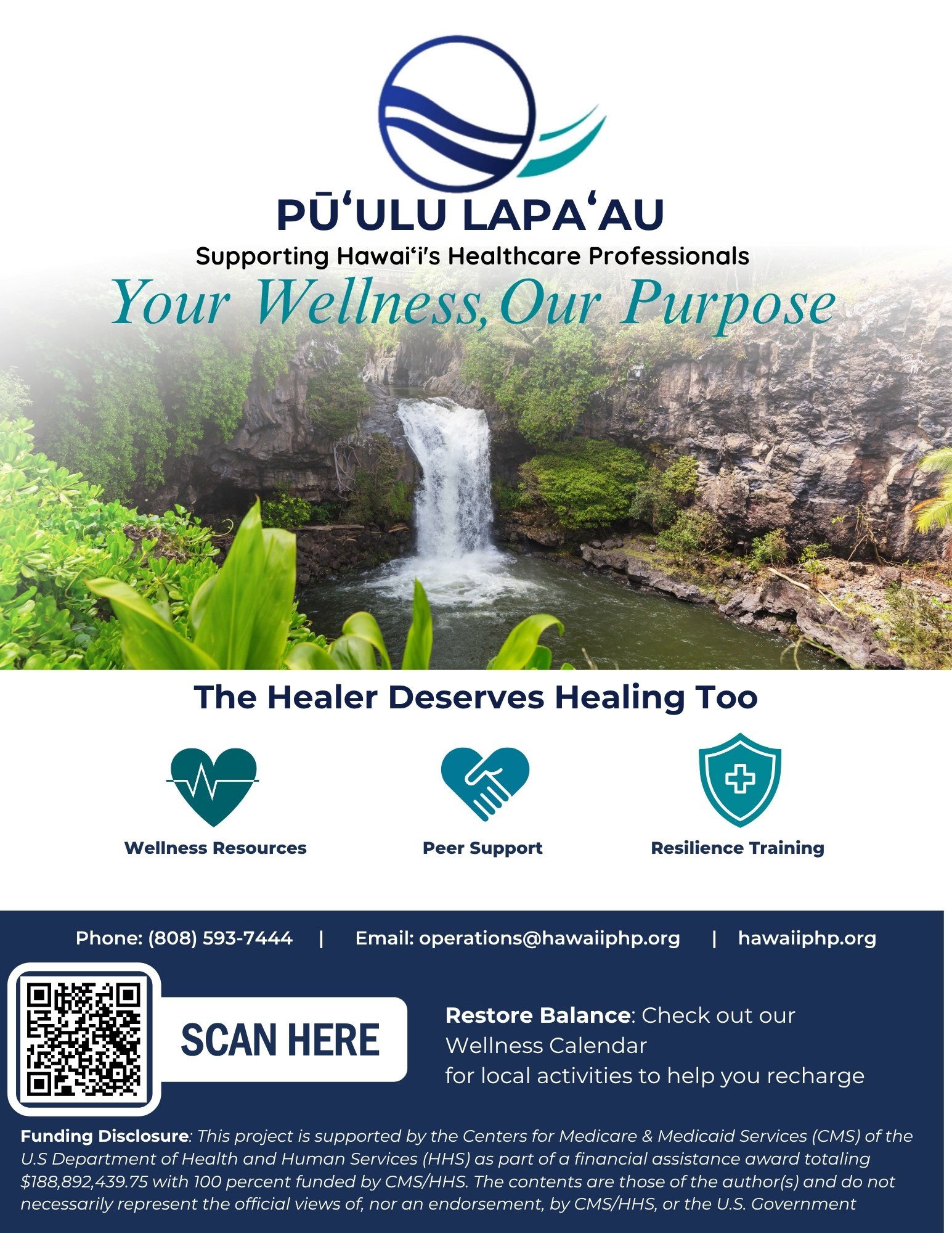
Puʻulu Lapaʻau: The Hawaiʻi Program for Healthcare Professionals, in partnership with the John A. Burns School of Medicine Area Health Education Center (AHEC), invites proposals for mini‑grants supporting programs that promote the health and well-being of healthcare professionals across rural Hawaiʻi. This initiative is funded through the Centers for Medicare & Medicaid Services (CMS) Rural Health Transformation Program.


This project is supported by the Centers for Medicare & Medicaid Services (CMS) of the U.S. Department of Health and Human Services (HHS) as part of a financial assistance award totaling $188,892,439.75 with 100 percent funded by CMS/HHS. The contents are those of the author(s) and do not necessarily represent the official views of, nor an endorsement, by CMS/HHS, or the U.S. Government.

Scroll to Top